
Cross-Border Growth in Africa: What Pan-African Expansion Actually Costs Marketers.
The first time I worked on a campaign intended to reach audiences across multiple African markets, I made the same mistake many marketers make. I assumed scale was the challenge, and it wasn’t. The challenge was cultural translation. On paper, Africa often gets treated as a single market. A continent of more than 1.4 billion people. A rapidly growing digital economy.
One of the youngest populations in the world. Rising internet penetration. Expanding middle classes and increasing consumer spending power.
The numbers make for great headlines and even better pitch decks: “Untapped market.” “Next growth frontier.” “The future of global consumption.”
I’ve seen all the phrases.
The problem is that many expansion strategies stop there. From London, New York, Amsterdam, or Dubai, Africa can appear deceptively simple. A region full of opportunity waiting to be unlocked through enough media spend, the right creative assets, and a well-funded launch plan.Africa may be one continent geographically, but it is one of the most culturally, economically, linguistically, and behaviourally diverse regions on Earth.
In my really short time in this space, I’ve worked on campaigns that required understanding audiences across different African markets and communities. Whether leading strategic campaigns for international brands at Madison & Park, driving audience growth initiatives, or helping to launch products for brands like Bieresdorf Nigeria (Nivea), one lesson kept recurring:
There is no such thing as the African consumer. There are Nigerian consumers, Kenyan
consumers, Ghanaian consumers, South African consumers and even those labels don’t tell the full story.
A consumer in Lagos Island behaves differently from a consumer in Ibadan. A professional living in Nairobi’s business district may have very different motivations from someone in Mombasa. Urban youth culture in Johannesburg often operates differently from consumer culture in Cape Town. Yet many cross-border campaigns are built on broad assumptions that flatten these distinctions into a single audience profile.
The result is predictable. Brands enter markets believing they understand consumers because they have demographic data. But demographics tell you who people are; they rarely tell you why people care, and marketing succeeds or fails in the gap between those two things.
What I Learned Launching Products in Nigeria
One of the most valuable lessons I learned came while working on the launch of Konga Travels in Nigeria. At the time, Nigeria was experiencing significant economic pressure. Inflation was affecting leisure travel, and avid travellers were leaning toward budget travel. Value wasn’t simply a nice feature anymore. It was becoming a necessity.
Now, from the outside, the challenge looked straightforward. Promote affordability, increase awareness and drive bookings. But successful campaigns rarely happen because brands communicate what they want to say. They happen because brands understand what audiences need to hear.
The campaign succeeded because it wasn’t positioned around discounts alone. It was rooted in a genuine understanding of consumer realities and aspirations at that moment. The insight wasn’t about travel, it was about value and permitting travellers to enjoy something they wanted without feeling financially irresponsible, and that distinction mattered.
It reinforced something I continue to believe today: the best marketing isn’t built around products. It’s built around context.When brands move across borders, context changes, and if your strategy doesn’t change with it,
performance suffers. When marketers discuss expansion, they often focus on tangible costs like media budgets, talent acquisition, distribution and compliance.
Those costs matter, but the most expensive part of expansion is often relevance and this requires a lot of research, A/B testing, local expertise and most importantly, listening.
One example that always comes to mind is Uber’s expansion across Africa and Cross border. The company entered the continent with a product that had already proven successful across Europe and North America. The technology worked. The brand was recognised. The funding was there. On paper, everything looked ready to scale.
Then local realities got involved. In many African cities, card penetration was significantly lower than in Western markets. Consumers were more comfortable paying with cash. Internet connectivity was less predictable. Traffic patterns were unique. Safety concerns varied from city to city. In markets like Lagos, motorcycle transport was a larger part of everyday mobility than traditional taxis.
The original model wasn’t terrible. It simply wasn’t built for the environment it entered, and Uber eventually adapted by introducing cash payments in several African markets and adjusting parts of its operating model to fit local consumer behaviour. Competitors that understood local nuances from day one often gained ground faster because they designed around existing habits rather than expecting consumers to adopt new ones.
I’ve seen campaigns that looked perfect on paper underperform because they were built on assumptions rather than insight. The creative was excellent, the targeting was accurate, and the execution was flawless.
The problem was that the campaign understood the market statistically but not culturally, and consumers can tell the difference almost instantly.
One of the most fascinating aspects of African consumer behaviour is how trust is built.
In many Western markets, trust is often institutional; consumers trust recognised brands. Across many African markets, trust is often relational. People trust people. Communities trust communities, and recommendations travel through family networks, friendship groups, religious communities, neighbourhoods, and increasingly through digital communities. The messenger can matter as much as the message.
One of the clearest examples of this came from the early days of food delivery in Nigeria. Today,
ordering food through an app feels routine. But when platforms first emerged, convincing people to pay for food they hadn’t seen, from restaurants they hadn’t visited, through an app they barely knew, was a much harder sell than many founders anticipated. The challenge wasn’t technology.
It was trust.
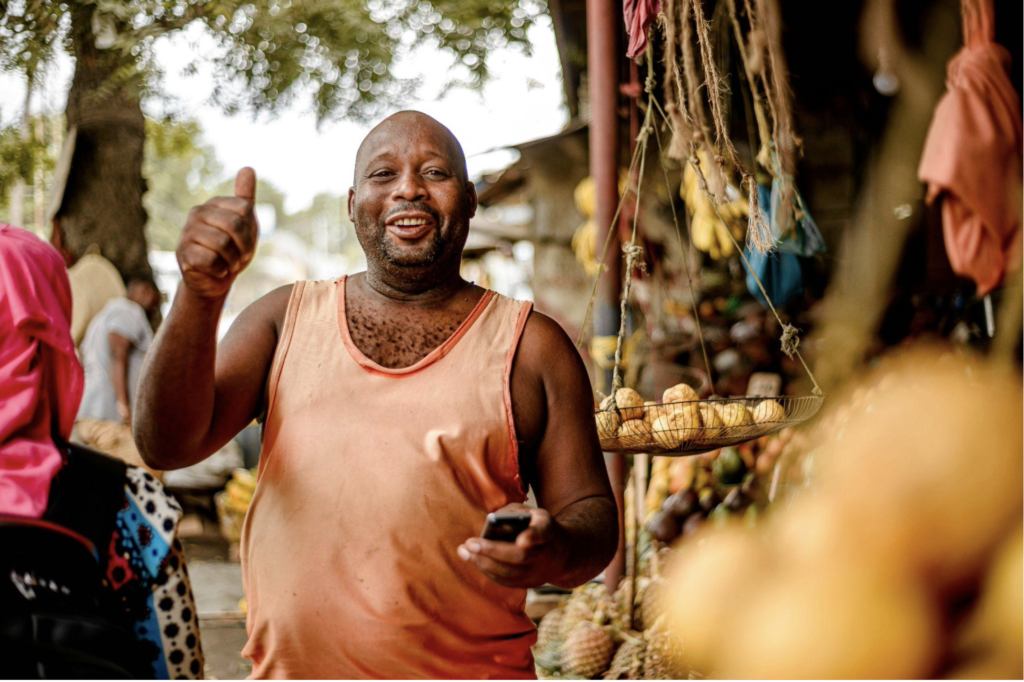
Jumia Food understood this early. Rather than forcing consumers into digital payments before they were ready, the platform embraced cash on delivery. On the surface, it looked like an operational inconvenience. Riders had to handle cash. Reconciliation became more complicated. The model was less efficient, but culturally, it made perfect sense. Consumers could see the food before parting with their money. They could verify the order had arrived. The transaction felt familiar because it mirrored how commerce had always worked.
In effect, Jumia Food wasn’t just delivering meals. It was creating a bridge between traditional consumer behaviour and digital commerce. That bridge mattered because once trust was established, habits began to change. Years later, newer players like Chowdeck and Glovo entered a market where consumers were already far more comfortable ordering online. They were able to build on the behavioural groundwork that had been laid before them, focusing on faster delivery, better user experience, stronger logistics networks, and more seamless digital payments.
What looks today like a technology success story was, at its core, a trust-building exercise.
The lesson for marketers is simple. Consumers don’t adopt products because they’re innovative. They adopt products when innovation feels familiar enough to trust and when brands mistake technological readiness for consumer readiness, expansion becomes far more expensive than it needs to be.
Across Africa, some of the most successful companies didn’t win because they introduced something completely new. They won because they understood existing behaviours well enough to build from them, and I firmly believe that Africa represents one of the most exciting growth opportunities in modern marketing. But the brands that win won’t necessarily be the ones with the largest budgets; they’ll be the ones with the deepest curiosity and the will to spend time understanding local realities before launching campaigns.
Pan-African growth isn’t about scaling what already works. It’s about learning what works where and the marketers who understand that distinction will be the ones shaping the continent’s next chapter of growth.
Follow ADMARP on LinkedIn
READ MORE ON ADMARP Mar-Tech & Product Leadership Series.