Search visibility is no longer only about blue links and keyword positions. As AI-powered search experiences increasingly synthesise answers and cite sources, Nigerian marketers need a more disciplined way to m...
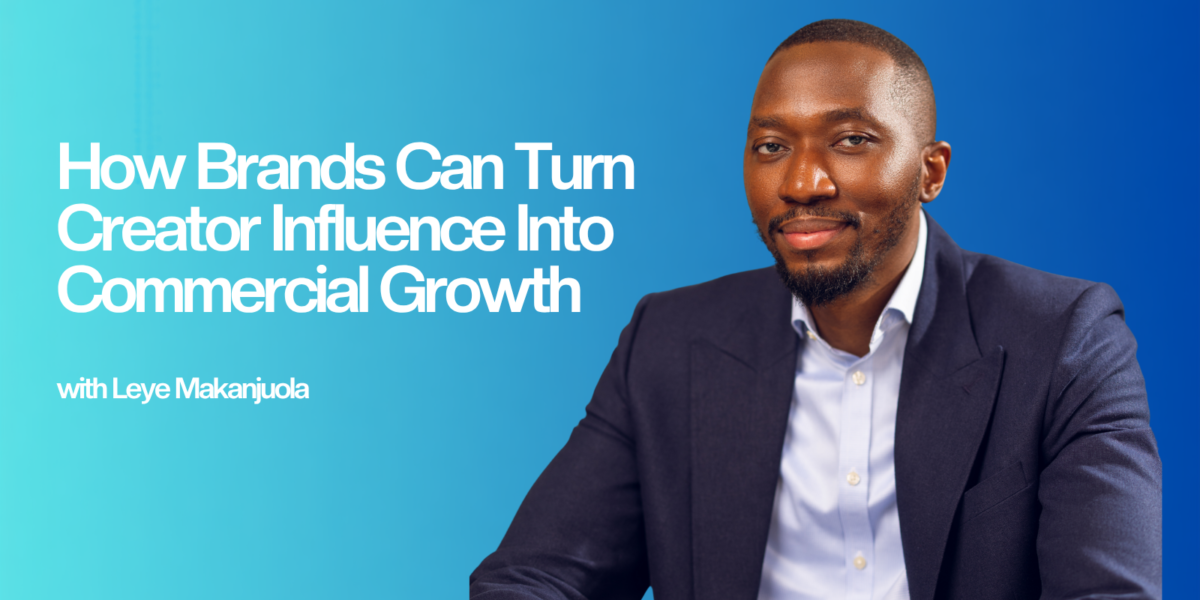
By Leye | CEO, Intense Digital
For years, influencer marketing in Nigeria operated largely as a traditional media buy: identify a creator with a substantial following, agree on a fee, approve a post, and evaluate success in likes, comments, reach, and the occasional surge in profile visits. While that playbook persists, marketing budgets are swiftly shifting elsewhere.
The fundamental question has changed. Brands no longer ask how many people saw a piece of content, but rather what actions they took. Did they register, purchase, download, or return?
This pivotal distinction defines the transition from conventional influencer marketing to true creator commerce.
Creator commerce is far more than influencer marketing. It represents a structured ecosystem where creators act as commercially accountable partners. Rather than merely introducing a product, they actively guide consumers through initial conversion, repeat purchases, and sustained brand engagement.
Why the Creator Economy is No Longer Just About Influence
Nigeria’s creative economy is projected to hit $13.6 billion by 2028, anchored by the massive global reach of Afrobeats with over 250 million Spotify user playlists featuring Nigerian artists.
For brand leaders, the critical metric is the commercial outcomes derived from it. Take local beauty and lifestyle brand, House of Tara, which scaled its retail distribution across West Africa by empowering a network of independent makeup artists and beauty creators as active commercial distributors. This was accomplished not merely through traditional advertising, but by leveraging creators as an engine for direct distribution. Similarly, TikTok Shop continues to
generate billions in gross merchandise value by integrating creators directly into retail transactions across active markets.
This shift makes complete sense. First, brands paid creators just for reach. Then, they moved into brand ambassadorships to build trust. Next came affiliate links tied to clicks and sales.
Creator commerce brings all of this together: creators bring their authentic voice, cultural connection, and audience insights, while also accountable for sales, new customers, and retention.
Case Study 1: The Syinix Naija Creators Program
In July 2026, home appliance manufacturer Syinix launched a localized creator initiative exemplifying the strategic shift toward affiliate-driven creator commerce within high-consideration product categories.
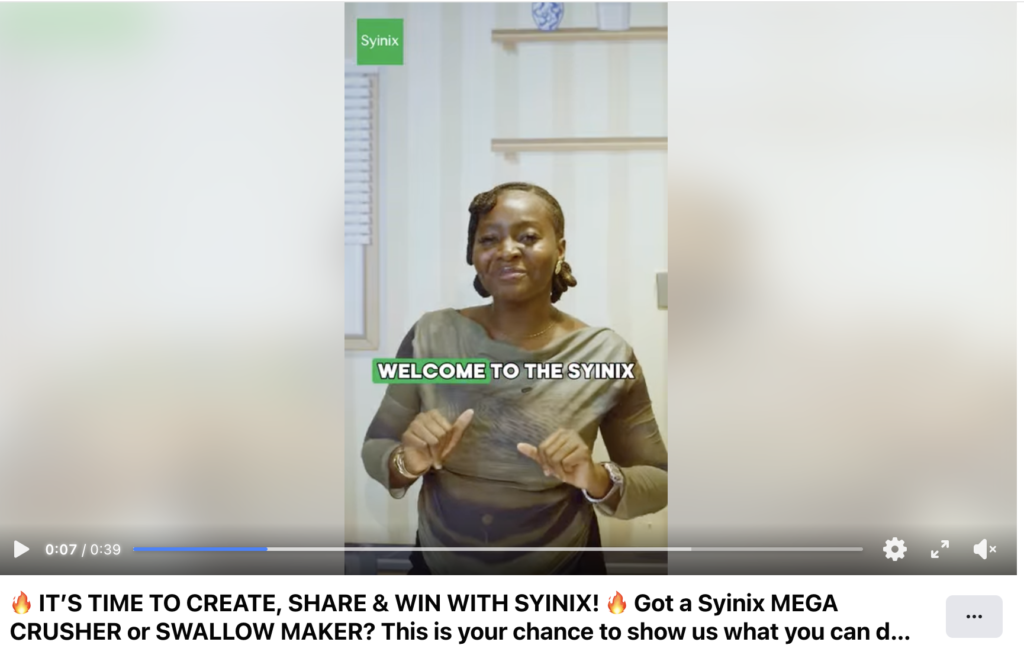
● The Fit: Syinix recognised that celebrity shoutouts do not sell high-ticket products like refrigerators, televisions or the kitchen appliances. Nigerians always love to check out reviews before purchasing, so over time they put their trust in reviews from micro and mid-tier creators, home organisers, tech reviewers, family vloggers, whose audiences come to them specifically for buying guidance.
● The Partnership: Rather than paying a few celebrities, Syinix built an always-on partnership network. Selected creators are provided with free appliances to use in their daily lives, alongside a unique affiliate link or code to earn commissions on the sales they generate.
● The Activation: A food vlogger uses a Syinix blender in their daily recipe prep, or a home decor creator features a Syinix TV in a living room makeover. There are no strict, corporate scripts, just the creators showcasing how the appliances make their everyday Nigerian lives easier.
● What Made It Different: It transitions marketing from a fixed expense to a
performance-based revenue engine. By giving creators physical products and
commission, creators earn when the brand sells, so they stay invested well beyond any single campaign.
Case Study 2: Bumpa Storefronts & Social Commerce Creator Affiliate Networks
Nigerian lifestyle brands, and social vendors scale direct-to-consumer salesby leveraging Bumpa’s platform to partner with creators on affiliate models, converting social engagement into automated, trackable sales pipelines.
● The Fit: Shoppers rarely buy fashion or lifestyle products from ads alone. Instead, they based their buying judgement on outfit posts, styling and try-on videos from creators they
trust.
● The Partnership: Using Bumpa’s inventory and store management ecosystem, social vendors equip lifestyle creators with unique affiliate storefront links and custom discount codes, transitioning collaborations from fixed fee posts to pure performance models.
● The Activation: Creators showcase products in daily vlogs and social posts, directing their followers to their personalized Bumpa storefront links. Bumpa automatically manages inventory levels, processes multi-channel payments, and attributes each sale directly to the referring creator in real time.
● What Made It Different: It eliminates manual order processing and DM-based sales friction while providing end-to-end performance visibility. Vendors maintain complete ownership of customer data and real-time sales analytics, while creators gain transparent commission tracking for every transaction generated.
Case Study 3: Golden Penny Foods & The Creator Ecosystem

● The Fit: When Golden Penny wanted to push its Pasta and Noodles, they didn’t rely solely on traditional TV commercials or generic celebrity endorsements. They needed to tap into what influences the modern Nigerian kitchen. Food creators like Ify’s Kitchen and Diary of a Kitchen Lover have built highly engaged communities by sharing well detailed Nigerian recipes. They are trusted authorities in the kitchen. When they say a specific brand of pasta doesn’t get soggy, or a specific noodle brand has the best spice blend, their audience listens and buys.
● The Partnership: Instead of relying solely on one-off influencer campaigns, Golden Penny Foods actively positioned itself within the creator ecosystem.They did this by heavily supporting the Pulse Influencer Awards for “Food Influencer of the Year” (which was won by Ify’s Kitchen).They also launched interactive digital campaigns like #MyGoldenPennyPastaIsBetter and #IWantWhatIWant, transforming passive audiences into active brand advocates.
● The Activation: Golden Penny tasked the creators with developing unique recipes, like smoky jollof pasta or spicy asun noodles, positioning the brand as the major ingredient.
These creators then triggered a massive wave of user-generated content by challenging their followers to recreate the dishes or invent their own custom twists to win cash prizes.
● What Made It Different: By tying the creator’s recipe directly to a consumer challenge, Golden Penny shifted from passive advertising to interactive engagement. The consumer had to physically go to the market, buy Golden Penny products, cook the meal, and post it online to participate. It drove both massive brand visibility and widespread user-generated participation.
These three case studies highlight distinct commercial engines: Syinix leverages always-on affiliate networks for high-consideration products, Bumpa automates storefront integration for friction-free retail sales, and Golden Penny drives direct product trial through recipe challenges and user-generated content. Rather than asking creators to simply post about a brand, each model embeds the commercial mechanism directly into the creator’s natural content style, defining the strategic shift from passive influencer marketing to accountable creator commerce.
How Brands Can Tap Into Creator Commerce
Executing creator commerce effectively requires moving beyond promotional discount codes toward a structured operational strategy:
● Define the Core Objective: Establish precise campaign goals from the outset.
Determine whether the partner is tasked with driving product discovery, trial acquisition, or customer retention. Creative strategy and measurement frameworks should align directly with this objective.
● Prioritize Relevance Over Reach: A smaller creator with the right audience and category credibility can sometimes deliver better outcomes than a much larger creator with a less relevant audience.
●Optimize Conversion Architecture: Creator activity generates intent, but landing environments determine conversion rates. Ensure mobile optimization, reliable inventory management, frictionless payment options, and responsive customer support are in place before launch.
● Establish Balanced Compensation: Structure agreements to reward creative production as well as performance results. Define clear attribution rules (such as custom links or checkout codes) to ensure creators are equitably compensated and not penalized for site-level conversion bottlenecks.
● Implement Comprehensive Measurement: Track full-funnel indicators alongside top-line sales, covering engagement depth, click-through rates, and customer acquisition costs. Combine direct link tracking, customer surveys, and analytics to capture holistic campaign impact.
The Brand and Business Scorecard: Products with extended buying cycles, such as financial instruments, or digital platforms, rarely
convert on initial exposure. In these categories, creators build familiarity, consideration, and brand equity. Nevertheless, strategic partnerships must maintain actionable commercial signals.
The dual scorecard evaluates success across two distinct pillars:
● Brand Metrics: Lift in branded search volume, direct website traffic, brand sentiment alignment, and category share of voice.
● Commercial Metrics: Outbound clicks, conversion rates, generated revenue, cost per acquisition (CPA), customer retention, and asset licensing value.
Branded search growth serves as a strong indicator of real influence. When creator messaging resonates, consumers increasingly search for the brand directly rather than relying solely on tracking links.
Conversely, partnerships that elevate brand lift without driving downstream commercial action fall short of creator commerce. While paying purely for brand awareness remains valid, organizations should clearly distinguish brand awareness spend from performance-driven commerce strategies.
The Strategic Shift
Adopting creator commerce does not mean abandoning brand building; it involves tightly linking cultural relevance with sales conversion. Strategic creator partnerships continue to produce memorable content and drive discussion, reaching audiences traditional advertising cannot penetrate. The distinction lies in campaign design: clear mapping of the customer journey, defined target actions, reduced purchase friction, and robust attribution. Market leaders build integrated creator commerce infrastructure, selecting aligned partners, co-creating high-value content, and measuring both brand sentiment and revenue impact. A single post may spark attention, but a structured partnership drives demand, accelerates conversion, and builds long-term customer relationships.
Turning Influence Into Outcomes
Creator commerce delivers maximum impact when designed as an end-to-end system rather than grafting sales metrics onto standard promotional posts. Success depends on strategic alignment, giving creators natural narrative roles, establishing seamless buyer journeys, and measuring both brand health and performance metrics.
This integrated focus guides our approach across Intense Group. Stardust Creator Network supplies the software and infrastructure connecting creators with brand partners; Purple Stardust directs campaign strategy, production, and execution; and Intense Digital manages measurement and attribution to deliver clear performance visibility. Our goal is not to reframe
every creator as a transactional salesperson, but to transform creator influence into sustained customer relationships and measurable commercial growth.
About the Author

Leye Makanjuola is a seasoned marketing and technology leader and the driving force behind Intense Digital, a data-driven digital marketing agency in Lagos, Nigeria, Purple
Stardust, a creative and content marketing agency in Lagos, Nigeria and Stardust Creator Network, a platform that helps creators turn content into structured income, systems, and long-term ownership. With over a decade of experience shaping digital transformation for leading brands across Africa and now the UK, Leye is at the forefront of helping businesses scale through data-driven storytelling and full-funnel marketing strategies.
LinkedIn Profile

By Oghenemaro Ebrorhie For years, marketing in financial services has followed a familiar playbook: launch a campaign, generate leads, customers get to download app, sign up and send them over to sales in terms...
Trust travels through people, not logos. When a peer recommends a product, that carries a weight no ad can buy, and the data backs it up: research shows companies with strong communities grow revenue about 2.1 times faster than those without, and brands with active communities see roughly 46% higher customer lifetime value. McKinsey estimates online communities generate over $1.1 trillion in economic value a year. As paid channels get pricier and AI-generated content floods every feed, the brands that own a real community are quietly outgrowing the ones that only buy attention.
Here’s what community-led growth is, why it’s working so well now, why it fits African markets in particular, and how to build one that actually drives growth instead of dying in three months.
What community-led growth is
Community-led growth (CLG) is a go-to-market approach where an active community of customers, users and advocates becomes a genuine driver of acquisition, retention and expansion. Instead of pushing promotional messages at people, you build a space where they learn from each other, share experiences and solve problems together, and that trust and belonging pulls more people in and keeps them.
The shift in one line: your most engaged customers stop being consumers and start being contributors.
Why it’s working so well now
Community isn’t new. What changed is the environment around it, and three forces have pushed CLG from nice-to-have to strategic priority:
- Paid channels keep getting more expensive. Ad costs climb every year, so an acquisition model that compounds without incremental spend looks better and better.
- AI content fatigue raised the authenticity premium. Audiences in 2026 spot generic, machine-made marketing quickly, and genuine conversation between real people stands out more than it used to.
- Algorithms throttle organic reach. A post from your account reaches a fraction of your followers without paying. An owned community, a group, a forum, a newsletter, sits outside that algorithm.
The market has noticed. One 2026 B2B report found 52% of sales leaders now prioritise social media and community building in their budget. And it’s a retention engine as much as an acquisition one: at any moment only about one in five buyers is actively in buying mode, while the other 80% are engaging with content and communities, which is exactly where a community keeps you present until they’re ready.
Why this fits African markets
Community-led growth isn’t an imported tactic here. It’s close to how adoption already works. Distribution in African markets travels through people, WhatsApp groups, referrals, word of mouth, trusted voices, more than through paid funnels. Trust is the currency, and it’s earned peer to peer. A brand that builds a genuine community is simply formalising the way its market already spreads, and doing it without the ad budget a lean team doesn’t have. In a region where every naira of spend has to work, a channel that compounds on trust rather than spend is close to ideal.
It pairs with product-led growth, it doesn’t compete
CLG and product-led growth aren’t an either/or. The product gets users in the door and to their first value; the community keeps them engaged, helps them succeed and turns them into advocates who bring the next users. Together they form a flywheel: better product experience feeds a more active community, and a more active community feeds adoption and retention. If you’ve read our pieces on product-led growth and retention over acquisition, community is the layer that makes both compound.
Why most communities fail, and what makes them work
Be honest about the failure mode, because it’s common. Most brand communities die because they start with the platform instead of the purpose. A team decides to “build a community,” picks Slack or Discord, invites a few hundred people, and posts content on a schedule. Within three to six months engagement drifts to near zero and the manager is talking to an empty room.
The ones that last are built around a genuine shared purpose, a professional challenge, a role, a craft, that exists independently of the brand’s commercial interest. The rule that separates the two: the community has to be more useful to its members than it is promotional for you. Help members first, and the growth follows. Treat it as a broadcast channel, and it dies.
One more truth worth setting expectations on: this is a long game. Communities that produce real results tend to take twelve to eighteen months of genuine investment. Anyone expecting quick ROI will be disappointed.
How to measure it
Clicks and impressions won’t capture this. The metrics that matter are different:
- Community-sourced pipeline: leads and deals influenced by community engagement
- Retention for members versus non-members: usually the clearest proof of value
- Referrals and user-generated content produced by the community
- Community-qualified leads and net retention impact: newer measures of how participation shifts renewal and expansion
If a metric looks social but changes nothing after 90 days, cut the activity behind it.
How to start
- Lead with purpose, not your product. Define the shared reason your people would show up even if you weren’t selling anything.
- Start where your people already are. A WhatsApp group or a newsletter beats an empty Discord. Meet them on familiar ground.
- Design for participation. Rituals, useful content and reasons to contribute, not a feed you broadcast into.
- Seed it deliberately, then hand it over. Bring the first members and set the tone, but let active members lead. The best communities take on a life of their own.
- Measure what matters and give it time. Track contribution and retention, and commit for the long haul.
A note from a community that grew this way
This isn’t theory for us. ADMARP started in 2017 and grew into a body of more than 2,000 digital marketing professionals across Nigeria and the diaspora, not through ad spend, but through people finding genuine value in showing up for each other. That community is the reason the Digital Product Growth Summit exists at all. Community-led growth built the room the summit fills.
Where this connects
Community, and the trust that drives growth in African markets, runs through the whole ADMARP Digital Product Growth Summit on Friday 27 November in Lagos. Read why we put marketers, PMs and founders together, or register free and join the room in person or online.
Frequently asked questions
What is community-led growth? Community-led growth is a go-to-market strategy where an active community of customers, users and advocates drives acquisition, retention and expansion. Instead of broadcasting promotional messages, the brand builds a space where members learn from each other and solve problems together, and that trust attracts and retains customers.
Why does community-led growth work? Because trust travels through people. Peer recommendations carry more weight than ads, communities sit outside throttled social algorithms, and they compound without incremental ad spend. Research links strong communities to faster revenue growth and higher customer lifetime value.
How is community-led growth different from product-led growth? Product-led growth gets users to experience value through the product itself. Community-led growth builds connection, support and advocacy around that experience. They complement each other: the product brings users in, and the community keeps them and turns them into advocates.
Why do most brand communities fail? Most fail because they start with the platform instead of the purpose, and treat the community as a channel to broadcast into. Engagement then drifts to near zero within a few months. Communities that last are built around a genuine shared purpose and are more useful to members than promotional for the brand.
How do you measure community-led growth? Through community-sourced pipeline, retention of members versus non-members, referrals and user-generated content, and newer measures like community-qualified leads and net retention impact, rather than clicks and impressions. Cut activities that look social but change nothing.
Follow ADMARP on social media via LinkedIn, Instagram, and X for more information.


Most marketers already use AI every day. According to SurveyMonkey data, about 88% now use it in their day-to-day work, yet most organisations are still running isolated experiments rather than building AI into...
Most marketing problems in 2026 aren’t strategy problems. They’re org-chart problems. The way the work changed, more channels, faster cycles, AI in the middle of everything, but most teams are still...
Here’s a number that should reframe how you think about scaling on this continent: according to the GSMA’s Mobile Economy Africa 2026 report, almost one billion people, about 63% of Africa’s p...
Building With AI: What It Actually Means for African Growth Teams The question about AI stopped being “should we use it” a while ago. By 2026, AI drafts the copy, cuts the video, sorts the data and ...
Performance marketing used to reward whoever could operate the ad platforms best. In 2026, the platforms operate themselves, acquisition keeps getting more expensive, and a growing share of buying decisions sta...

The ADMARP Digital Product Growth Summit 2026 is Africa’s first cross-functional growth summit. It takes place on Friday 27 November 2026, from 9:00am to 5:30pm, at 157 Gardens Event Centre in Ilupeju, La...