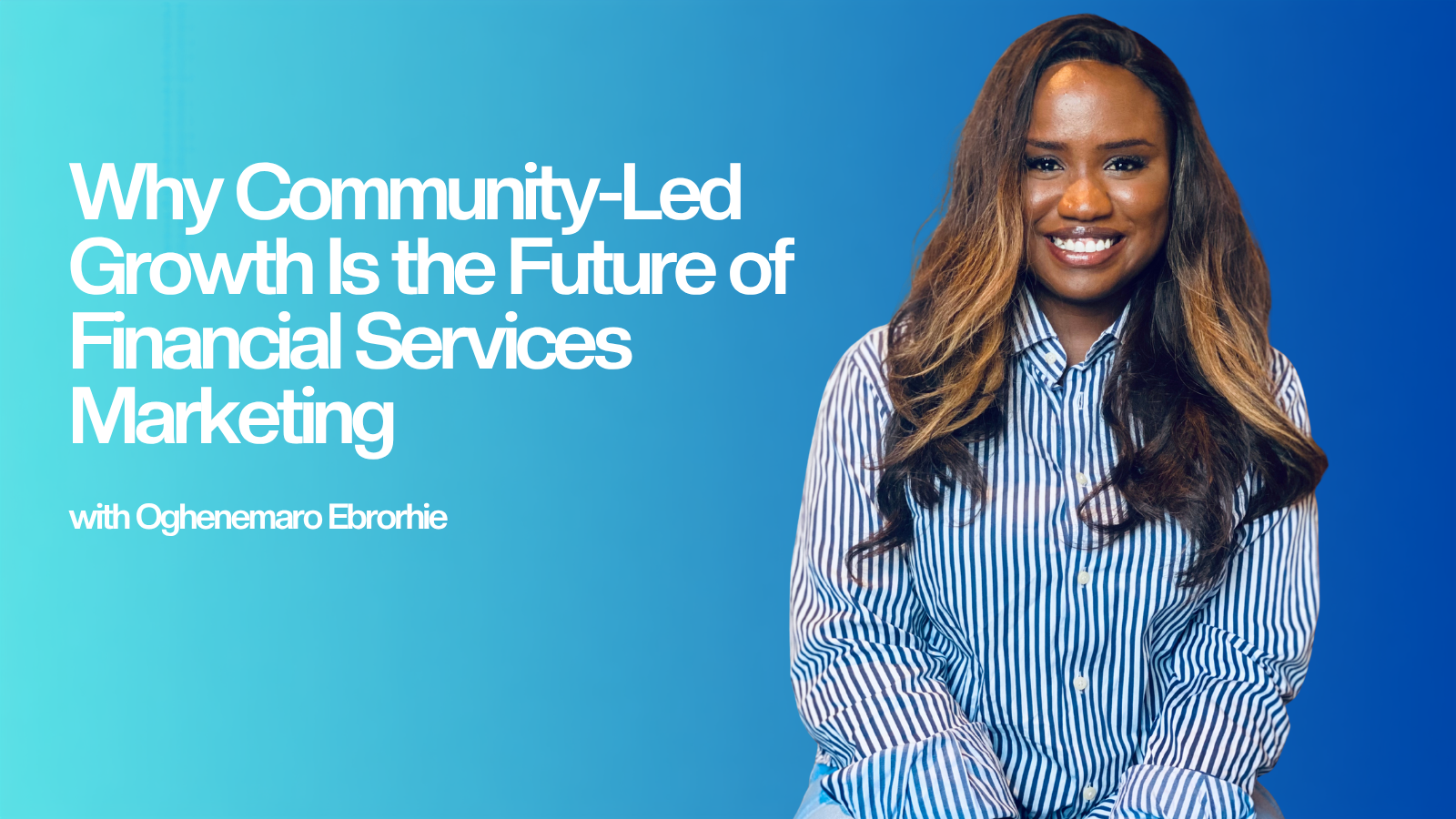

By Oghenemaro Ebrorhie
For years, marketing in financial services has followed a familiar playbook: launch a campaign, generate leads, customers get to download app, sign up and send them over to sales in terms of insurance in this case, and measure conversions. While this approach still has its place, customer expectations have changed significantly. Today’s customers don’t just buy products, they seek belonging, education, and ongoing value.
As marketers, we often focus on acquiring customers, but we don’t spend enough time asking an important question:
What happens after they become customers?
I have come to believe that one of the biggest opportunities for marketers today lies in community-led growth.
Communities Build Relationships Before They Build Revenue
Across industries, brands are discovering that communities create stronger relationships than campaigns alone, even the content creators of today’s world now understand this.
A campaign captures attention.
A community earns trust.
The distinction matters because trust has become one of the strongest drivers of customer retention, advocacy, and lifetime value.
Sometimes financial institutions often interact with customers only when they need to sell, renew, or resolve complaints. Imagine instead creating an environment where customers willingly engage with your brand throughout the year because they consistently receive value.
That is what community achieves.
The Shift from Selling Products to Solving Problems
Currently, I work in the Insurance sector and one lesson I’ve learned is that customers rarely wake up wanting insurance.
They wake up wanting peace of mind.
They want healthier lives.
They want financial confidence.
They want better futures for themselves and their families.
The product simply becomes one solution within a broader customer journey.
This realization changes how marketers think.
Instead of asking:
“How do we sell more policies?”
We begin asking:
“How do we help people navigate the moments that matter most?”
“How do we make insurance more lifestyle focused while still being a necessity, oh well, it is a necessity”
When you start there, your marketing becomes less transactional and significantly more relevant.
Marketing Doesn’t End at Conversion
Many organisations celebrate conversions but neglect engagement.
Ironically, the period immediately after acquisition often determines whether customers become loyal advocates or simply one-time buyers.
Community creates multiple opportunities to remain relevant long after the first purchase.
Through educational content, webinars, networking sessions, newsletters, social groups, expert conversations, and events, brands can remain present without constantly selling.
Trust me, customers don’t mind hearing from brands that consistently help them.
They ignore brands that only appear when they want to make a sale.
The Power of Shared Experiences
One of the most overlooked marketing assets is customer-to-customer interaction.
When people with similar interests or life stages interact, conversations become more authentic than any advertisement.
Whether it is entrepreneurs sharing business experiences, retirees exchanging retirement lessons, or first-time homeowners discussing financial planning, peer learning strengthens trust in ways traditional campaigns cannot replicate.
The marketer’s role evolves from broadcaster to facilitator.
Rather than creating every conversation, we create environments where valuable conversations happen naturally.
And this is really hard, not easy as I type this because there is a whole lot going on our marketers table.
Partnerships Multiply Impact
Community building also creates opportunities for meaningful partnerships.
When organisations share a similar audience, collaboration becomes more valuable than competition.
Banks, insurance companies, pension administrators, healthcare providers, technology firms, and educational institutions all serve customers with overlapping needs.
Instead of repeatedly trying to acquire the same audience independently, organisations can create joint value through educational initiatives, customer events, and knowledge-sharing platforms.
The result is better customer experiences and stronger brand perception for everyone involved.
Metrics That Matter
Community marketing requires marketers to think differently about measurement.
Traditional metrics like impressions and clicks remain important, but they don’t tell the full story.
The questions become:
∙ Are customers returning? Are they participating?
∙ Are they referring others? Are they spending more time with the brand?
∙ Are customers finding enough value to remain engaged even when they aren’t buying?
These behavioural indicators often become leading indicators of future business growth.
Marketing Is Becoming Experience Design
The marketer of the future will spend less time simply promoting products and more time designing customer experiences.
Campaigns will continue to drive awareness.
Automation will improve efficiency.
Artificial intelligence will personalize communication.
But genuine human connection will remain a competitive advantage.
Communities offer that connection at scale.
They transform customers into members.
Members into advocates.
And advocates into growth engines.
Final Thoughts
The most successful brands over the next decade won’t necessarily be those with the biggest advertising budgets.
They’ll be the ones that consistently create value beyond their products. People remember brands that educate them.
People recommend brands that help them. People stay with brands that make them feel part of something bigger.
Perhaps the next frontier of marketing isn’t another campaign. Perhaps it’s building communities where customers don’t simply buy from us, but genuinely belong.
Follow ADMARP on Linkedln for more