
Most marketers already use AI every day. According to SurveyMonkey data, about 88% now use it in their day-to-day work, yet most organisations are still running isolated experiments rather than building AI into how they actually operate. That’s the gap that separates teams typing more prompts from teams getting real leverage: the first use AI as a feature, the second turn it into a system.
This is a practical guide to that shift, what AI marketing automation is, what to automate first, and how a lean team turns repetitive work into machinery that runs without them. (For the strategy of what to hand AI versus keep human, see our piece on building with AI. This one is about the build.)
What AI marketing automation is
AI marketing automation is using AI to run marketing processes, not just assist with tasks. Where old automation followed fixed rules you set, AI automation learns from your data, adapts to behaviour in real time, and increasingly executes whole workflows with light human oversight. It’s the difference between a scheduled email and a system that decides who to email, when, with what, and adjusts based on what happens.
The three layers, and where the leverage is
It helps to see AI in marketing as three layers, because most teams are stuck on the first one:
- Rule-based automation. The classic kind: you set a trigger, it fires an action. Useful, but it only does what you told it.
- Generative AI. It creates when you ask, a draft, a variation, a summary. This is where most marketers live today.
- Agentic AI. The new layer. An agent identifies what needs doing, plans, and acts, often without being prompted each step. It can plan a campaign, generate the content, schedule distribution, watch performance and adjust, while you set the objective and review the output.
The leverage is in moving up the stack, from doing tasks with AI to letting systems run the tasks for you.
Why this is happening now
The move from assistance to autonomy is accelerating fast, and the numbers back it up:
- Agents are going mainstream. Gartner forecasts that around 40% of enterprise applications will embed task-specific AI agents by the end of 2026, up from less than 5% in 2025.
- Expectations are high. In one survey of marketing executives, 68% expected AI to handle more than half of their campaign management by late 2026, though only 31% had the data infrastructure to support autonomous decisions, a gap worth respecting.
- The results are measurable. Organisations integrating AI agents reported an average 23% lift in lead conversion over a year, and AI-driven automation has been linked to meaningful cuts in operating and acquisition costs.
The direction is clear: automation is shifting from scheduled workflows to self-optimising systems.
What to automate first
Don’t try to automate everything. Start where the work is repetitive, high-volume and rule-shaped, and where a mistake isn’t catastrophic. The usual high-leverage candidates:
- Lifecycle and email flows. Onboarding, win-back and re-engagement sequences that trigger on behaviour, with AI drafting and personalising at scale.
- Lead response. An instant, personalised first reply and a clean CRM entry the moment a lead comes in.
- Reporting. Pulling data into a readable weekly summary, so nobody spends Monday building slides.
- Content repurposing. One long asset turned into a week of platform-native posts.
- Ad and budget optimisation. Systems that watch performance and shift spend, with guardrails.
Pick one, build it properly, prove it, then move to the next.
Treat AI as an operating system, not a feature
Here’s the mistake that quietly wastes the most money: bolting AI onto an old process instead of redesigning the process around it. The teams getting real returns embed intelligent automation into their core workflows rather than sprinkling it over campaigns. That means redesigning how the work flows first, then letting AI carry the volume inside it. Tools layered onto a broken process just produce the same output slightly faster.
It also means getting your data in order. Autonomous systems are only as good as the first-party data feeding them, which is exactly why so many teams have the ambition for automation but not yet the infrastructure. Fixing the data foundation is part of the build, not a separate project.
Why this matters most for lean teams
For a small team, this is the closest thing to hiring you can’t yet afford. AI automation lets a lean marketing function do the volume of a much bigger one, run lifecycle programmes, respond to every lead, report weekly, without adding headcount. In markets where every naira has to work and teams are small by necessity, the ability to reduce manual execution and cut acquisition costs isn’t a luxury, it’s how you stay competitive. The structure enterprises are spending fortunes to adopt is one resource-constrained teams can build lean and early.
What to keep human
Automation doesn’t mean absence. Human oversight stays essential for brand voice, accuracy, and any decision that needs judgment a system can’t replicate. Set the objectives, define the guardrails, and review the output, especially anything customer-facing. The goal is to shrink manual execution, not to hand over the wheel. And build in governance early: clear ownership, quality checks and decision rights, so the automation compounds instead of quietly going wrong at scale.
How to start
- Pick one repetitive workflow that eats your team’s time and isn’t high-risk.
- Redesign the workflow before you automate it, so you’re not automating a mess.
- Build it with the tools you have, an AI assistant plus your existing CRM or automation platform, and keep a human reviewing the output.
- Measure it, time saved, conversion, cost, then only scale to a second workflow once the first has a playbook another person could run.
Where this connects
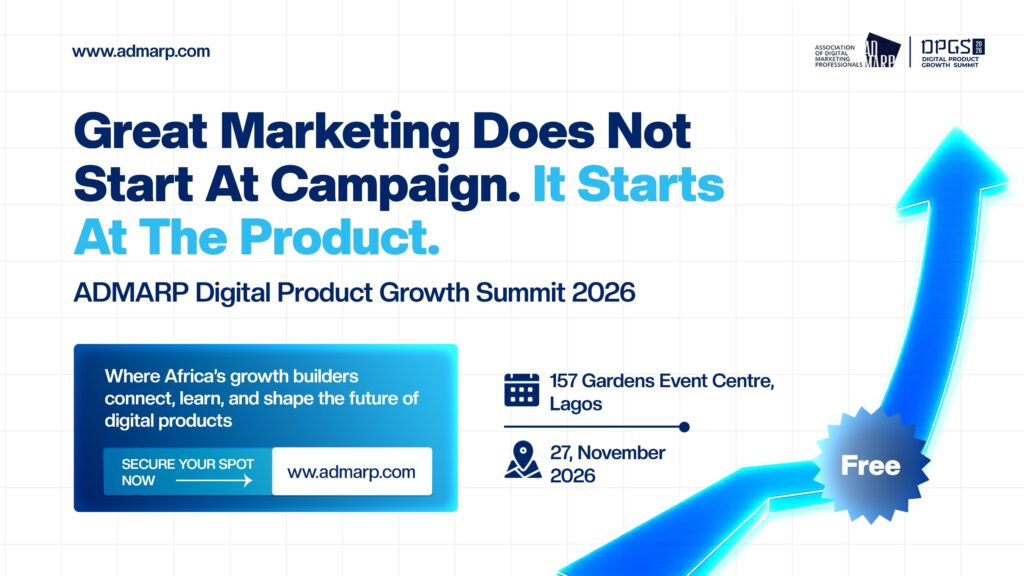
Building with AI, including the automation this post covers, is a Room B focus at the ADMARP Digital Product Growth Summit on Friday 27 November in Lagos. Read why we put marketers, PMs and founders together, see the strategy side in building with AI, or register free.
Frequently asked questions
What is AI marketing automation? AI marketing automation is using AI to run marketing processes rather than just assist with individual tasks. Unlike rule-based automation, AI-driven systems learn from data, adapt to behaviour in real time, and increasingly execute entire workflows with light human oversight.
What can you automate in marketing with AI? Common high-leverage candidates are lifecycle and email flows, instant lead response and CRM entry, reporting, content repurposing, and ad and budget optimisation. Start with repetitive, high-volume, rule-shaped work where a mistake is not catastrophic.
What are AI agents in marketing? AI agents are autonomous systems that identify what needs doing, plan, and act, often without being prompted at each step. A marketing agent can plan a campaign, generate content, schedule distribution, monitor performance and adjust, while the marketer sets the objective and reviews the output. Gartner expects around 40% of enterprise applications to embed AI agents by the end of 2026.
Is AI marketing automation only for big companies? No. It is especially valuable for lean teams, because it lets a small function do the volume of a much larger one without adding headcount, and it has been linked to meaningful reductions in operating and acquisition costs. Small teams can build automation lean and early.
What should stay human in AI marketing automation? Brand voice, accuracy, judgment calls and customer-facing decisions. Humans set objectives, define guardrails, review output and own governance. The aim is to reduce manual execution, not to remove oversight.