
Building With AI: What It Actually Means for African Growth Teams
The question about AI stopped being “should we use it” a while ago. By 2026, AI drafts the copy, cuts the video, sorts the data and writes the first version of half the work a growth team does. The real question now is sharper: what should you hand to AI, what should stay human, and where does that leave your edge? Get that split wrong and you either fall behind or drown in generic output. Get it right and a small African team can do what took a much bigger one two years ago.
Here’s what building with AI actually means for a growth team, and how to do it without losing the thing that made you good.
What “building with AI” means
Building with AI means using AI as a working part of how you operate, not a novelty you try once and forget. It’s AI in the daily flow, drafting, researching, analysing, personalising, so your people spend their time on judgment and decisions instead of production. The goal isn’t to replace the team. It’s to move the team up the value chain.
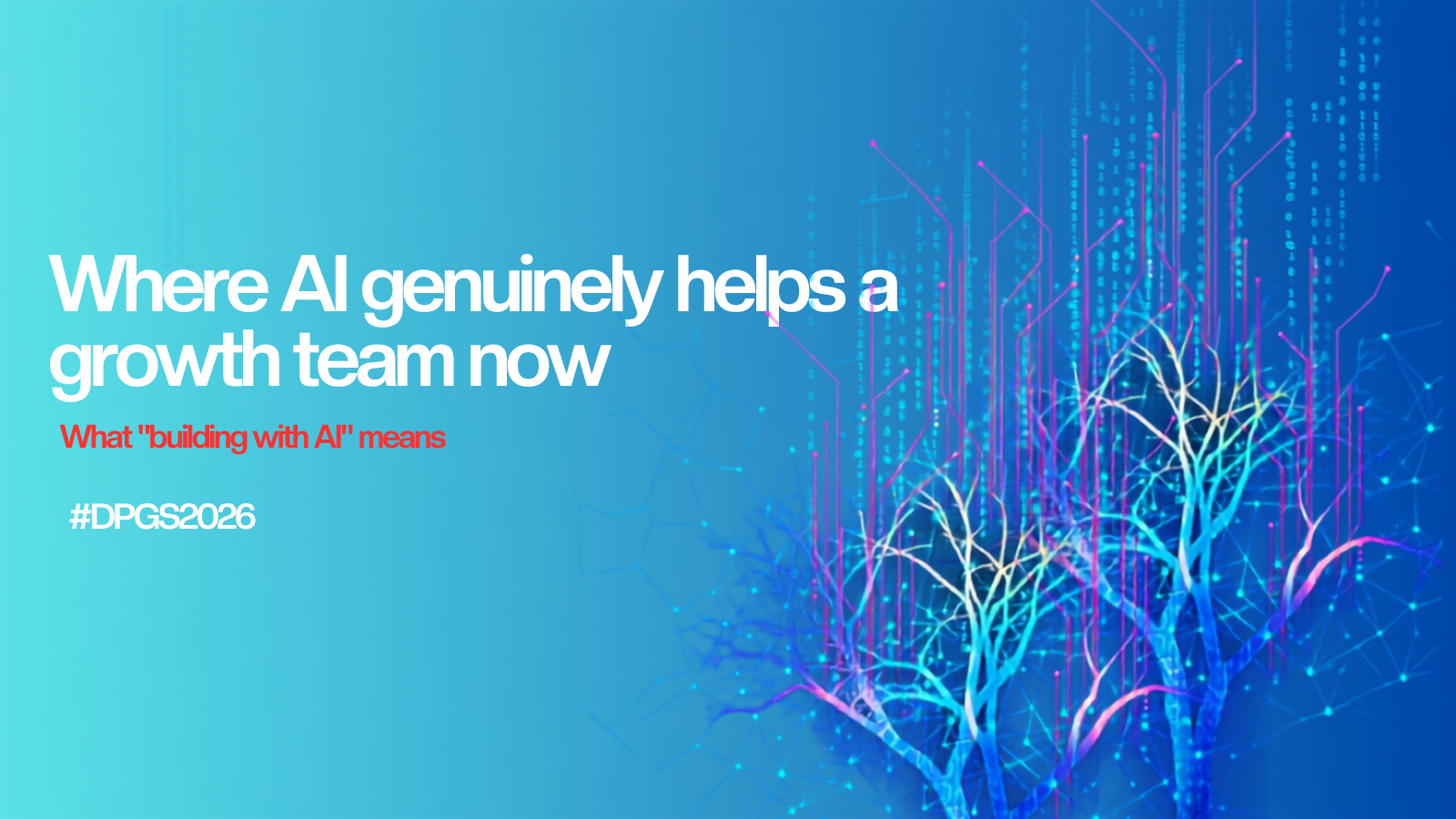
Where AI genuinely helps a growth team now
Some of this is real, and some of it is hype. Here’s where the value is actually landing:
- Content volume. First drafts of posts, emails, ad variations and briefs, fast. One good long piece becomes a week of content.
- Research. Market scans, competitor checks, customer-review synthesis, the groundwork that used to eat days.
- Lifecycle and personalisation. Segmenting, timing and tailoring messages at a scale a small team could never do by hand.
- Analysis. Turning messy data into a readable answer, and spotting patterns a human would miss.
- The unglamorous middle. Resizing, reformatting, transcribing, summarising, the work that filled calendars and taught nobody much.
What should stay human
This is the part teams get wrong. AI is a brilliant intern and a poor decision-maker. Keep these human:
- Judgment. What to build, which bet to make, when to overrule the machine. AI has no skin in your game.
- Taste and brand voice. AI regresses to the average. Your distinctiveness is the thing average erases, so a human has to sit on top of everything it produces.
- Strategy. The offer, the positioning, the call on where to point the effort. AI can inform it; it can’t own it.
- Relationships and accountability. The trust, the partnerships, the answer when something goes wrong. Those are yours.
The teams that win treat AI as a force multiplier on human judgment, not a substitute for it.
The lean-team advantage
Here’s the part that matters most in this market. AI closes the gap between a small team and a big budget. A solo founder or a three-person growth team in Lagos can now research, produce and personalise at a level that used to need a department. In a tight funding environment, that’s not a nice-to-have, it’s how you compete with people who have more money than you. Used well, AI is the closest thing a lean African team has to hiring ahead of its budget.
The African lens
Two things are worth saying plainly.
First, there’s a leapfrog opportunity. Teams here aren’t weighed down by a decade of old processes, so they can build AI into how they work from the start rather than bolting it on. That’s an advantage, not a disadvantage.
Second, AI doesn’t know your market the way you do. It’s trained mostly on the rest of the world, so it will confidently give you advice built for card-first, high-data, high-trust markets that don’t match local reality. Your judgment about payments, trust, distribution and cost is exactly the human layer AI can’t supply. Guard it.
There’s also a discovery angle: as buyers increasingly ask AI assistants before they search, being clear and citable in AI answers is becoming its own growth channel. Most African brands are close to invisible there. That’s an open lane.
What not to do
- Don’t over-automate the judgment out. If AI does all the reps, your people, especially juniors, never build the instinct that makes them good. Keep humans doing enough real thinking to stay sharp.
- Don’t ship AI slop. Generic, unedited AI output is obvious and it erodes trust. Every piece needs a human who cares on top of it.
- Don’t ignore AI discovery. If your brand isn’t clear to the machines, it won’t get recommended by them.
- Don’t chase every tool. Pick a few that fit your workflow and go deep, rather than collecting subscriptions you never learn properly.
How to start
- Find your biggest time sink and hand the first draft of it to AI this week.
- Put a human editor on top of everything that goes out. Non-negotiable.
- Free the time you save for judgment, the strategy and decisions AI can’t make.
- Check how AI describes your brand today, and fix it if the answer is wrong or empty.
Where this connects
Building with AI is a Room B session at the ADMARP Digital Product Growth Summit on 27 November in Lagos, alongside product-led growth in African markets and scaling technology for the continent. If you’re building at the product-and-growth intersection, it’s the room to be in. Read why we put marketers, PMs and founders together, see the full programme, or register free.
Frequently asked questions
What does “building with AI” mean for a growth team? It means using AI as a working part of daily operations, drafting, researching, analysing and personalising, so the team spends its time on judgment and decisions rather than production. The aim is to move people up the value chain, not to replace them.
What should growth teams use AI for? Content first drafts, research and competitor scans, lifecycle personalisation at scale, data analysis, and the repetitive production work like resizing and summarising. These are where AI reliably saves time today.
What should stay human when using AI? Judgment, taste and brand voice, strategy, and relationships and accountability. AI can inform these but should not own them, because it has no stake in your outcomes and regresses to the average.
Will AI replace marketers? It’s replacing tasks, not marketers, but it’s changing the job. Routine execution is being automated while strategy, creative judgment and decision-making become more valuable. Marketers who use AI as a multiplier on their judgment are pulling ahead.
How can small African teams use AI to compete? By using AI to research, produce and personalise at a scale that used to need a department, effectively hiring ahead of budget. Lean teams that build AI into their workflow from the start can compete with far better-funded rivals.
LOOKING TO READ MORE? CHECK OUT
Your Complete Guide to the ADMARP Digital Product Growth Summit 2026
Building a Growth Engine on a Startup Budget: A Field Guide for Nigerian Founders
Product-Led Growth in Africa: What Works, What’s Hype, and What the Data Says
Retention Over Acquisition: The Growth Shift African Startups Can’t Ignore
Follow ADMARP on social media via: LinkedIn, Instagram, and X for more information.