
Performance marketing used to reward whoever could operate the ad platforms best. In 2026, the platforms operate themselves, acquisition keeps getting more expensive, and a growing share of buying decisions starts inside an AI assistant rather than a search bar. The tactics that carried the last decade don’t all carry into this one.
Here’s what actually changed, what still works, and what it means if you’re running paid growth in an African market.
What performance marketing is
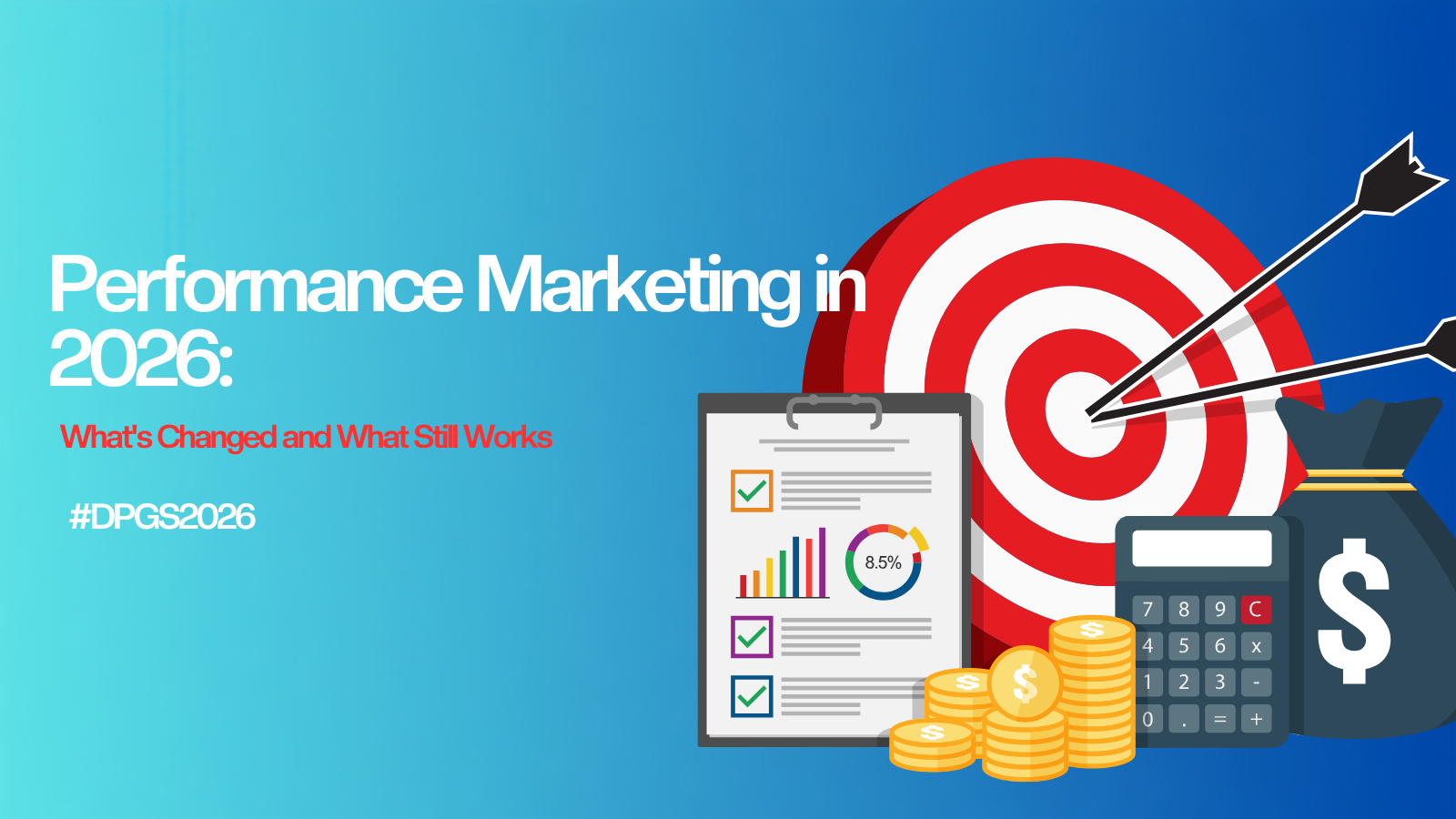
Performance marketing is paid marketing you measure by a specific, trackable action, a click, a signup, a purchase, rather than by reach or impressions. You pay for outcomes, or as close to them as the platform allows, and you optimise toward a cost per result. Paid search, paid social, display and retargeting are the usual channels.
The discipline hasn’t changed. What’s changed is who does the work and how discovery happens.
What changed in 2026
Four shifts matter most.
- AI runs the campaigns now. The ad platforms have automated most of the levers marketers used to pull by hand, targeting, bidding, even creative variations. Being the best button-pusher is no longer the edge. Feeding the machine the right inputs, and knowing when to overrule it, is.
- Acquisition keeps getting more expensive. Paid channels are more competitive and more crowded, so the cost of buying a new customer keeps climbing. That’s a big part of why so many teams are shifting budget toward keeping the customers they already have.
- Discovery is moving into AI answers. Buyers increasingly ask ChatGPT, Perplexity and Gemini before they ever run a search, and often get an answer without clicking anything. Some demand that used to be catchable with a paid search ad now gets resolved inside an AI response.
- Measurement got harder. Privacy changes and signal loss have made clean attribution tougher, so the old habit of crediting the last click is less reliable than it used to be. Teams are leaning more on blended metrics and incrementality than on tidy per-click reports.
What still works
None of that kills performance marketing. It just moves the advantage back to fundamentals the platforms can’t automate for you.
- A sharp offer. No amount of AI optimisation rescues a weak offer. What you’re selling, to whom, and why now is still the job of a human who understands the market.
- Creative that earns attention. As targeting and bidding get automated, the creative is where you still win or lose. The message and the hook are doing more of the work than ever.
- Sending traffic to something that converts. Paid gets more expensive the moment your landing experience leaks. The cheapest way to lower your cost per result is often to fix what happens after the click.
- Knowing your real numbers. Cost per acquired customer against what that customer is actually worth over time. Teams that know their unit economics can spend with confidence. Teams that don’t are guessing with money.
The African-market lens
Everything above holds, and a few local realities sharpen it.
Payments still decide conversion: paid traffic that hits a checkout assuming everyone has a working card leaks exactly where it costs most. Data and device costs mean heavy landing pages quietly raise your acquisition cost. And a lot of buying still runs on trust and word of mouth, so paid works best when it points to something that already has social proof behind it, not a cold page. In markets where every naira of ad spend has to count, efficiency isn’t a nice-to-have, it’s the whole game.
How to run performance marketing efficiently now
- Fix conversion before you scale spend. Get the offer and the landing experience right, then pour budget on what’s already working.
- Feed the machine, then judge it. Give the platforms clean inputs and good creative, but hold them accountable to your real cost-per-customer, not the platform’s own success metric.
- Compete on creative. Put your best thinking into hooks and messages, the lever AI hasn’t taken.
- Measure blended, not just last-click. Watch overall cost per acquired customer and payback, and treat single-channel attribution with suspicion.
- Don’t ignore AI discovery. Make sure your brand is clear and citable in AI answers, because some of your future demand is being shaped there now.
Where this connects
Performance marketing in 2026 is a Room A session at the ADMARP Digital Product Growth Summit on 27th November in Lagos, alongside retention over acquisition and building a growth engine on a startup budget. If you run paid growth, it’s the room to be in. Read why we put marketers, PMs and founders together, see the full programme, or register free.
Frequently asked questions
What is performance marketing? Performance marketing is paid marketing measured by a specific, trackable action such as a click, signup or purchase, rather than by reach. You optimise toward a cost per result across channels like paid search, paid social, display and retargeting.
What has changed in performance marketing in 2026? Four things: AI now automates most campaign operation, acquisition costs keep rising, discovery is shifting into AI answers where people get results without clicking, and privacy changes have made attribution harder. The advantage has moved from operating the platforms to offer, creative and measurement.
Is performance marketing still worth it in 2026? Yes, but the winning approach changed. With targeting and bidding automated, results now depend on a sharp offer, strong creative, a landing experience that converts, and knowing your true unit economics. Teams that lean on those fundamentals still get strong returns.
How is AI changing performance marketing? AI runs most of the operational levers, targeting, bidding and creative variation, so marketers add the most value through strategy, creative and judgment. AI is also changing discovery, as buyers increasingly get answers from AI assistants before they search.
What performance marketing metrics matter most? Cost per acquired customer measured against customer lifetime value, payback period, and blended performance across channels rather than last-click attribution alone. These reflect efficient, sustainable growth better than platform-reported results.